

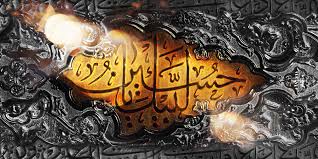
Shafaqna India: Mir Babar Ali Anis was one of the most celebrated Urdu poets of nineteenth-century India and is widely regarded as one of the greatest composers of marsiya (elegiac poetry commemorating the tragedy of Karbala). He was born in the Gulab Badi quarter of Faizabad, in the present-day Indian state of Uttar Pradesh. At birth, he was named Mir Syed Babar Ali Rizvi, a lineage that traces its ancestry to Imam Ali al-Ridha (Imam Reza) (AS), the eighth Imam of the Twelver Shia tradition. Anis is known as one of the most dedicated poets of all ages who wrote most of his poems about Imam Hussain (AS).
Anis’s lifelong devotion to Imam Hussain (AS)
Anis began his literary career by composing poetry on a variety of subjects. However, encouraged by his father and inspired by his profound devotion to Imam Hussain (AS), he eventually devoted himself to the composition of marsiya, the genre for which he achieved enduring fame. His works elevated the elegy from a conventional poetic form into a sophisticated literary art distinguished by its vivid imagery, psychological depth, and powerful narrative technique.
One of the most remarkable aspects of Anis’s literary career is that he never composed panegyrics in praise of the rulers of his time. He also advised his sons to refrain from seeking royal patronage through poetry, believing that a poet’s highest calling was to uphold moral integrity and devote his art to nobler and more enduring subjects.
Many literary critics maintain that Mir Anis was a poet whose literary genius was devoted almost exclusively to the commemoration of Imam Hussain. While this assertion is best understood as a form of literary hyperbole, it nevertheless reflects the fact that Anis composed more elegies in praise of Imam Hussain than perhaps any other Urdu poet. He was raised in a family whose members were renowned for their devotion to the marsiya tradition, a legacy to which Anis himself alludes in the following verse:
My life has been spent wandering through that very desert;
Mine is the fifth generation devoted to the praise of Shabbir (Imam Hussain).
Anis is credited with composing approximately 1,200 marsiyas and 600 rubāʿiyyāt (quatrains). Some sources estimate that his poetic corpus exceeds 250,000 verses, while others attribute to him as many as half a million lines devoted to Imam Hussain. According to his grandson, Anis once composed a marsiya of 1,182 hemistiches recounting the events of Karbala in a single night. He also demonstrated extraordinary linguistic virtuosity by writing an entire elegy without employing any dotted letters of the Urdu alphabet. A number of his marsiyas remain unpublished to this day. His ethical quatrains have been collected in a volume entitled Anīs al-Akhlāq.
Anis’s Marsiya Poetry in Praise of Imam Hussain (AS) and Karbala
Anis portrays the companions of Imam Hussain as exemplars of courage, chivalry, and unwavering faith. In his youth, he devoted himself to horsemanship and swordsmanship, experiences that profoundly shaped his poetic imagination. As a result, his marsiyas are distinguished by remarkably vivid depictions of battle, mounted combat, swordplay, and heroic valor.
To this day, religious reciters and preachers across the Indian subcontinent continue to incorporate Anis’s poetry into the mourning ceremonies commemorating Imam Hussain. The artistic excellence of his marsiyas has led many historians of Urdu literature to regard the marsiya as the highest and most accomplished poetic genre in the Urdu literary tradition, with Anis standing as its greatest master.
Mir Anis, in his portrayal of the Night of Ashura, writes:
Tonight, what a desolate solitude surrounds Shabbir.
The moon of tyranny lies shrouded beneath Zahra’s grieving cloud.
On one side, the enemy ranks stand armed and arrayed;
On this side, no son remains, no nephew, no brother.
He walks on, receiving spears and enduring the blows of swords;
“Strike down the thirsty one!”—the oppressors cry in ruthless chorus.
In another poem, describing the luminous countenance of Imam Hussain and the beauty of his eyes, Anis writes:
Tell the eyes: every glance they cast is perilously close to sin;
How could seven veils not conceal the Light of God?
All creation waits in hope, for these eyes are the very source of divine generosity;
Though wounded themselves, they are the cure for every suffering heart.
Whoever, intoxicated, drank from the cup of their love
Was graced by a single merciful glance—and found new life.
Within them dwell grace, modesty, compassion, and majesty alike;
They are death itself, yet life everlasting—nectar, and poison too.
They see all, discern every subtle truth, and hold the wisdom of the ages;
They are Tasnīm, Paradise itself, and the flowing river of Kawthar.
In the following verses, Anis appears to describe the natural world; yet his portrayal of nature is, in truth, a portrayal of the plain of Karbala in the presence of Imam Hussain. Through the Imam’s presence, Karbala is transformed from an ordinary desert into a landscape suffused with divine light and the manifestation of God’s radiance.
In the battlefield, the Light of God reveals itself;
Every grain of dust glimmers with the radiance of Sinai’s revelation.
The brilliance of a single sun-like countenance reaches far beyond the horizon;
For miles upon miles, the earth has become a river of light, reflecting its glow.
O what beauty this heaven-born realm possesses!
The plain of Karbala has become an image of Paradise itself.
Even the azure heavens stand astonished by the light that rises from the earth;
The pale sun seems drawn toward that radiance like amber to its magnet.
The valley of battle outshines the gardens of Eden;
From every cloud of dust ascends a canopy of light.
The bearers of the heavens gaze on in wonder;
These are no specks of dust upon the ground—
They are stars shining upon the earth.


