

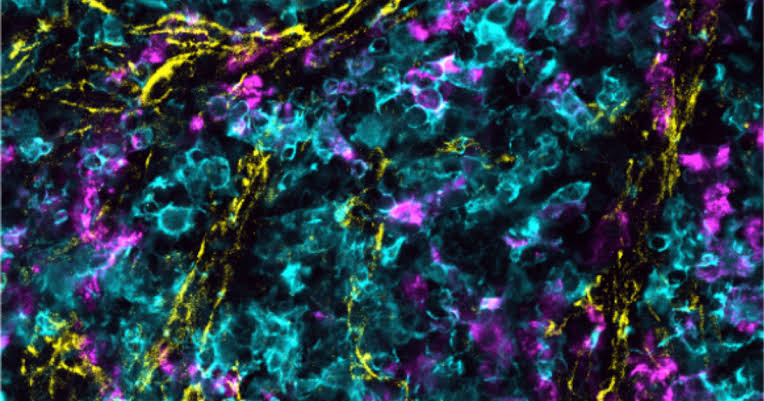
Shafaqna Health: Macrophages formed in the bone marrow can only assume the function of embryonal phagocytes, or “scavenger cells,” to a certain degree according to a study by the University of Bonn and the Peter Doherty Institute for Infection and Immunity at the University of Melbourne. The researchers have demonstrated that malaria infection causes permanent damage to resident CD163 macrophages in the spleen, which are responsible for cleaning the blood, recycling iron and communicating with other cells involved in the body’s immune response. Their findings could harbor potential not only for more effective malaria vaccines but also for developing drugs and treatments to combat other infectious diseases. The paper is to be published in the journal “Immunity” but can already be accessed online.
Macrophages are an important component in our immune system. As part of our nonspecific defenses, these “big eaters” serve as our body’s “cleanup crew,” tracking down pathogens, removing dead cells and digesting foreign substances to make them harmless.Resident macrophages regenerate through cell division. If many of them are destroyed as a result of a severe infection or injury, they cannot divide quickly enough to keep up. In that case, their role is assumed by white blood cells, which are created in the bone marrow and which then develop into macrophages. “People used to assume that this replacement was virtually 1:1, but our latest research shows this not to be the case,” Mass explains.
This is a problem because CD163 macrophages also control parts of the immune response in addition to their scavenging role. Specifically, they use a signaling molecule to communicate with macrophages in the marginal zone (an important structural component of the spleen). “This structure helps to make sure that the immune cells in the spleen can get the signals that they need to fight bacteria and viruses, and we found that this structure and the associated communication network is persistently damaged by malaria” said Dr Beattie, the co-lead of the study.
A series of follow-up experiments confirmed that eliminating the signaling molecule is enough to shrink the macrophage population in the marginal zone. If the CD163 macrophages are depleted, a malaria infection will be more severe, releasing more malaria-causing parasites into the bloodstream and making anemia last longer. And, because this damage is not just temporary, the prognosis for repeat infections is also significantly worse.
Findings can be applied to human beings
Given that CD163 macrophages are also present in our own spleen, the researchers believe that malaria causes a permanent change in the human macrophage architecture too.
“Our results indicate that a single malaria episode can leave a lasting impression on the immunological memory, particle filtering and the spleen’s iron metabolism,” Mass reveals. “This could be relevant for vaccine effectiveness, especially in parts of the world where malaria infections occur repeatedly.”
The study also does much to improve our understanding of how resident and recruited macrophages are formed, work and interact. In an ideal scenario, this could accelerate the development of drugs and treatments not only for malaria but also for other diseases.


