For years, India has projected itself as the world’s largest democracy, an emerging economic powerhouse and a nation whose institutions embody resilience and constitutional stability. This image has been central to New Delhi’s diplomatic outreach and its aspirations for greater global influence. Increasingly, however, developments within the country are challenging that narrative. Allegations of systemic failures in education, widespread public discontent, questions surrounding electoral integrity and growing criticism of the Modi government’s handling of dissent have combined to cast doubt on the strength and credibility of India’s democratic institutions.
The latest controversy centres on the country’s medical entrance examination system. The leak of this year’s NEET examination paper forced authorities to cancel the test and conduct a re-examination for approximately 2.2 million aspiring medical students under heightened security arrangements. The episode exposed serious shortcomings in the administration of one of India’s most important competitive examinations, raising concerns about accountability, transparency and the ability of public institutions to safeguard merit. Reports linking the controversy to more than 20 student suicides have further intensified public anger, prompting widespread demands for meaningful reforms and calls for Education Minister Dharmendra Pradhan to accept responsibility.
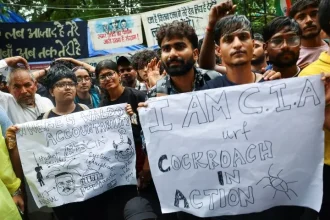
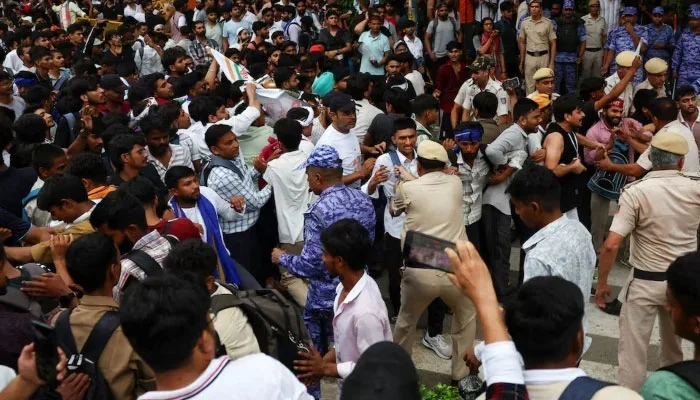
The crisis has also become a catalyst for broader political mobilisation. The emergence of the youth-led Cockroach Janta Party (CJP) movement reflects frustrations that extend far beyond examination irregularities. What began as protests against repeated paper leaks has evolved into a wider campaign questioning governance standards, institutional accountability and the government’s responsiveness to public concerns. Rather than easing tensions, the authorities’ response has attracted further criticism. Police action against demonstrators attempting to march towards Parliament, along with the forcible hospitalisation of hunger-striking activist Sonam Wangchuk, has reinforced allegations that the government is relying on coercive measures instead of constructive engagement with peaceful protesters.
Concerns over governance have been compounded by controversies surrounding India’s electoral processes. Reports indicate that three UN special rapporteurs have sought clarification from New Delhi regarding allegations that millions of voters, particularly Muslims, were removed from electoral rolls ahead of recent state elections. The controversy surrounding the Election Commission’s Special Intensive Revision of voter lists, especially claims that large numbers of names were deleted in West Bengal, has fuelled debate over transparency, due process and public confidence in the electoral system. Regardless of the eventual findings, such allegations have intensified scrutiny of institutions that are expected to remain impartial and beyond political contestation.
These domestic developments come at a time when India is seeking to expand its international influence and present itself as a leading voice of the Global South. Successive governments have highlighted India’s democratic credentials as a source of soft power while frequently drawing attention to governance shortcomings elsewhere in the region. Critics now argue that New Delhi itself faces internal challenges that cannot easily be dismissed as isolated incidents. Instead, they contend that recurring controversies over education, elections and the treatment of dissent point to deeper concerns about institutional integrity, increasing political polarisation, shrinking civic space and growing international attention to issues of democratic governance and human rights.
A strong democracy is measured not only by economic growth, military capability or diplomatic influence, but also by the credibility of its institutions and the confidence of its citizens. Public trust depends on transparent governance, accountability and the protection of constitutional rights, including the right to peaceful protest and free expression. Addressing shortcomings in the education system, ensuring the integrity of electoral processes and responding to criticism through dialogue rather than confrontation would strengthen, rather than weaken, India’s democratic foundations. Ultimately, the durability of any democracy rests on its willingness to confront institutional failures openly and to pursue reforms that reinforce public confidence at home as well as credibility abroad.
Shafaqna Pakistan
Note: Shafaqna do not endorse the views expressed in the article